Writers are usually told not to worry about formatting until the manuscript is finished. The advice sounds sensible, but the software built around it has created a strange and unnecessarily complicated workflow.
Write the manuscript in one application. Edit it in another. Move it into a formatting program. Export it. Find something that has broken. Go back and do it again.
Formatting has become something writers are expected to endure at the end of the process, rather than something the writing environment handles quietly from the beginning.
The page changes how the writing feels
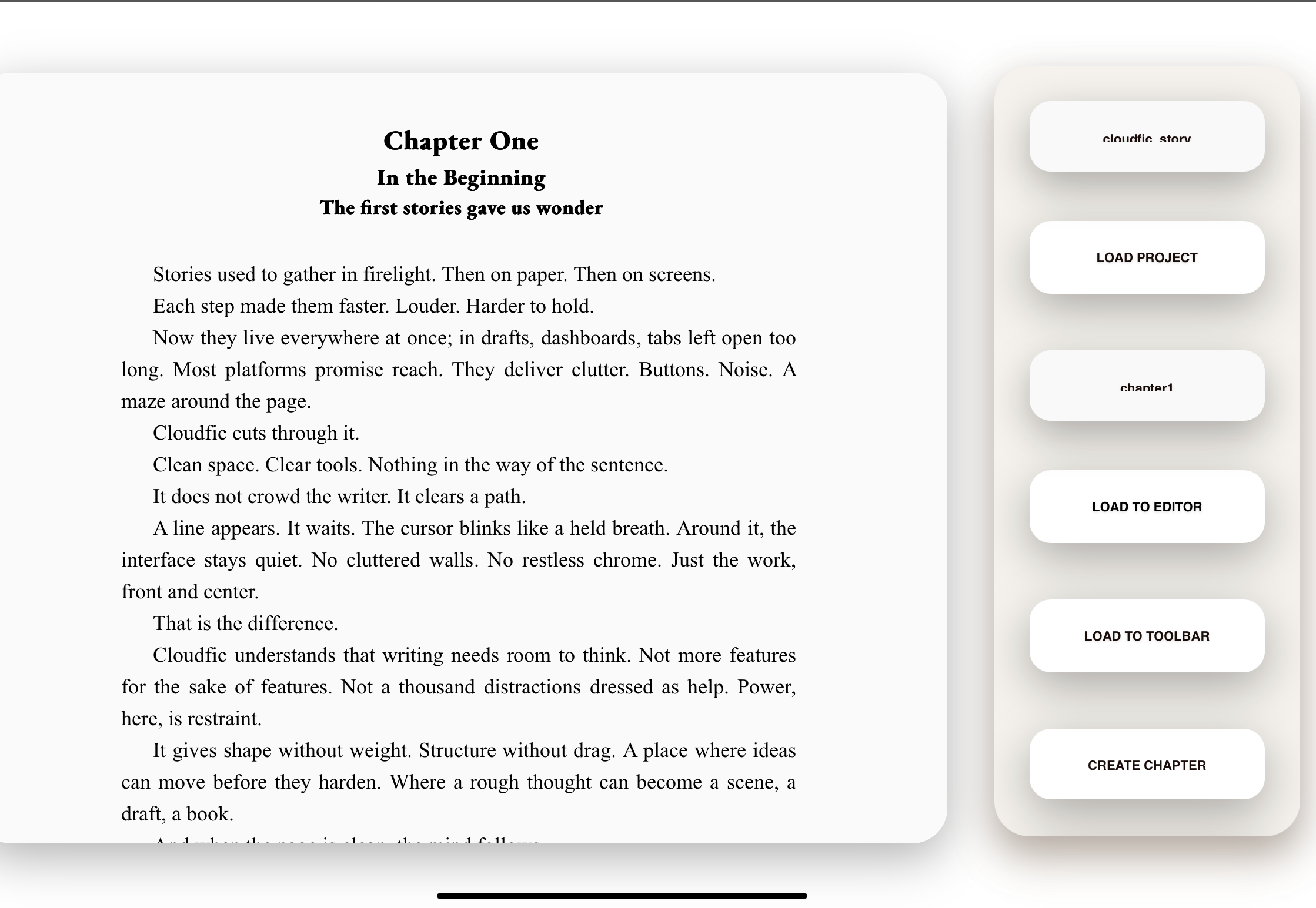
A wide office document does not feel like a paperback page. The line length is different. Paragraphs carry a different rhythm. Dialogue occupies the page differently. White space becomes harder to judge.
None of this means a writer should spend every morning adjusting margins, fonts or paragraph spacing. It means the software should already understand what a book page is supposed to look like.
When the writing space resembles the eventual book, the manuscript becomes easier to read, easier to assess and easier to imagine as a finished object.
The writer should see the book. The software should deal with the machinery.
Formatting should not mean fiddling
Good formatting is not about decorating the manuscript. It is about creating a page that disappears while the reader is using it.
The type should be comfortable. The margins should feel balanced. Paragraphs should flow naturally. Chapter openings should look deliberate.
A writer should not need to become a typesetter before they can produce a professional-looking book.
Nor should they need to understand the internal rules of several different applications before their chapter title appears in the correct place.
The traditional workflow creates friction
Most books begin inside Word, Pages, Google Docs or another general-purpose writing application. The document may contain manual spaces, tabs, inconsistent heading styles, hidden formatting and layout instructions that only work properly inside the original file.
When that manuscript is transferred into a dedicated formatter, the new software has to interpret what the writer intended.
Sometimes it succeeds. Sometimes a chapter heading becomes body text. Sometimes the wrong line receives a drop cap. Sometimes justification creates enormous spaces between words.
The writer then has to repair the manuscript inside a system they may never have used before.
One manuscript should create every format
A cleaner approach is to keep one structured manuscript and allow the page format to change around it.
Chapter titles remain chapter titles. Body paragraphs remain body paragraphs. Scene dividers, block quotes and centred text remain deliberate elements rather than visual tricks created with spaces and tabs.
The writer can then change the physical page without changing the book itself.
- Switch between B Format, Royal, Demy, US Demy and US Trade.
- Move into Agent format without rebuilding the manuscript.
- Preserve chapter structure across every version.
- Export a properly formatted PDF from the same manuscript used for writing.
The book should already feel like a book
Writers spend months or years creating a novel. The software should not make the result feel like an office document until the final afternoon.
The manuscript should feel calm, deliberate and readable from the beginning. The formatting should already be there, working quietly in the background.
When the page already feels right, the writer can stop thinking about formatting and return to the thing that actually matters.
The story.
Join the conversation
Share your experience, ask a question, or add something useful for the writers who arrive after you.
Keep it constructive. Disagreement is welcome; being a pillock is not.
No comments yet. Be the first person to leave something worth reading.